

20-Second Summary
With the fast-evolving AI innovation, 6G, and foldable designs, the future of smartphones is really changing at a fast pace, with almost all the brands being more focused on providing practical advancements like:
- Smarter Processors
- Sustainable Mobile Designs
- Immersive AR Features
- Modern AI Integration
We can expect more eco-friendly approaches in the manufacturing of future mobile phones, based on the sustainable preferences of Generation Z and Alpha, and along with that, we can also expect our phones to be more intelligent with AI innovation.
Will Mobile Phones Be Obsolete in 5 Years?
No! We cannot really say they will be obsolete in the next five years. We could expect to have this trend of them going obsolete after a decade or two, maybe, but for now, based on the market trends, and the expected models by famous companies, we are sure they are just going to become a little larger, smarter, and sustainable, but their physical being obsolete is not really expected in the next five years.

Smartphones Market Trends 2025
Now that we are sure that our smartphones are not yet obsolete in the upcoming five years, let us have a look at the current year trends in the smartphone market and how they will shape their future in the coming years.
Market Growth Trends
- Apple’s iOS markets are once again expected to lead the growth of the smartphone industry, contributing significantly to the overall market increase.
- IDC predicts foldable phones will grow steadily by a percentage of 6% in 2025, another 6% in 2026, and 11% in 2027.
- IDC also forecasted the worldwide smartphone shipments to grow by about 1.0% in 2025, reaching approximately 1.24 billion units.
- But even with better durability and lower prices, foldable smartphones are expected to stay niche, making up less than 3% of all smartphone sales by 2029.
- Brands are now more focused on attaining value growth over volume growth in the market.
- The Middle East & Africa (MEA) is predicted to be a leading growth region for smartphones, including the US, which is the leading market:
- Growth is expected to be driven by strong regional gains: IDC projects the Middle East & Africa to grow ~6.5%, the U.S. by ~3.6%, and Asia Pacific excluding China by ~0.8% in 2025
Sustainability and Ethical Considerations Trends
- More focus is being placed on making smartphones more sustainable and recyclable to preserve a better environment, meeting the market needs of new generations.
- The refurbishing of old phones is another way of reducing E-Waste and reusing mobile phones, which is a trend of 2025.
- Some sustainable brands are focusing on providing fair wages and a safe working environment to their employees, ensuring sustainable supply chain management.

- Production facilities are becoming more efficient to reduce carbon emissions.
- Renewable energy resources are now being readily used in the manufacturing processes to conserve energy.
- Companies are also focused on reducing the waste in their packaging and setting the sustainability message with practical examples, like:
- Google achieved 100% plastic-free packaging for Pixel, Fitbit, and Nest devices in 2024, ahead of its 2025 target.
- Samsung is continuously committed to replacing plastics with sustainable, certified fiber materials in its packaging and manuals.
Technological Trends
- With AI becoming a focal part of search results, and automation in smart devices in homes and offices that can be controlled via smartphones, people are now expecting AI as an emerging and significant factor in their mobile phones.
- The technological trends are still expecting the brands to focus on good battery consumption technology in smartphones in upcoming models.
- AR and VR will become the norm as technological inclusion in the future of smartphones. Just like AI, people expect their cameras to be able to show them AR specifications while capturing their images, while some expect a mobile to be connected with headgear to turn into a VR technology for advanced gaming experiences.
Future Trends in Smartphones: The Next Five Years
Based on the key trends of 2025 and how they are being adopted by the key brands in the smartphone industry, let us see how the future of smartphone trends will adapt to the global market and customer needs.

AI Innovation in Smartphones
AI in smartphones has been there since 2011, with the entry of Apple’s smartphone assistant Siri. From then on, we have really adapted it in the form of Alexa, Bixby, and several voice assistants, and now we have Meta AI bots integrated in every application from WhatsApp to Facebook and Snapchat.

- We can get our voice notes transcribed into text using AI with one touch.
- We can directly remove backgrounds or alter them in Google’s Photo application using AI.
- We can download AI chat applications like ChatGPT and Grok directly on our smartphones and ask them anything that’s coming to our mind, generate AI images, and Videos.
- The AI innovation in smartphones can actually integrate with smart devices around our homes and let us control the lights, energy, and security of our home from a remote location.
- These innovations are going to become more and more advanced, as now AI assistants will become increasingly autonomous, reducing the need for constant user input.
We can now expect AI innovation in smartphones as we are now moving from smart watches to AI-powered smart glasses that have been recently announced by Mark Zuckerberg.
- On September 17, 2025, Zuckerberg announced Meta’s new AI-powered smart glasses, the Ray-Ban Display and Oakley Vanguard, during Meta’s annual Connect event.
- The Ray-Ban Display glasses feature a built-in, see-through display for messages and video.
- The Oakley Vanguard glasses are designed for sports. These offer features like workout tracking.
- The AI integration in these glasses provides hands-free information, generates live captions, and also provides AI summaries of workout data.
- Meta has also integrated AI in their Meta Neural bands, which let you get rid of touch screens, and you can actually use finger gestures to control these bands, which, in combination with the AI glasses, help you do your tasks like calling, reading messages, and tracking your workout.
The future of smartphones based on innovation in AI integration is going to be more than smart glasses, as Analysts expect future AI integration to extend into holographic devices and advanced assistants.
Impact of 6G on Smartphones
Talking about how phones will change in the next five years, aside from the AI, another big factor is the high-speed internet that enables smartphones to run applications and AI.

6G is expected to roll out by 2030.
- This network successor of 5G will slowly integrate, and rather than replacing 5G, it will enhance it.
- The 6G will use advanced spectrums, and is likely to use centimeter waves (cmWaves) and terahertz waves (thzWaves) for high-fidelity applications.
- 6G technology will be able to support advanced technologies, including AI integrations and connected drones or robots.
- Smartphones with 6G will be able to deliver ultra-high speed connectivity, ultra-low latency, and massive capacity, enabling the following:
- Fully immersive VR/AR
- Seamless AI integration.
- Holographic video applications, etc.
- We can expect the broader connectivity of smartphones, including the ubiquitous satellite connectivity.
- With the introduction of 6G, the security risk for smartphones may increase, as the devices will hold more sensitive information, which can be at risk of leaking out.
- Devices will be enabled to analyze personal data to provide a better user experience, but this can lead to unauthorized access, which sometimes is a risk.
- Passwords and pins might not be sufficient alone, and tech companies will need to mitigate these threats by bringing innovations in biometric verifications, and also by introducing more tech approaches to increase user security over internet connectivity.
While 6G will put the world towards a faster network approach, it also comes with threats to user security, for which companies will need to come up with solutions.
6G and Smartphones Obsolescence
While we think mobiles will not completely go obsolete, I would like to state an interesting fact about the smartphones’ obsolescence regarding 6G.
Nokia’s ex CEO Pekka Lundmark shared that smartphones will not be the common interface after 6G will become fully operational worldwide, as they will be replaced with smart glasses, and other devices that could be operated physically with hands free integration.

While this remark was made in 2023 at the World Economic Forum, he also stated that many of the smart devices to control smartphones might also be able to be built directly
into our bodies.
Since we are unsure of any updates around the devices directly built into bodies, we are definitely seeing the smart glasses announced by Meta with EMG wrist bands already, so 6G might be an enabler of making the smartphones obsolete in futuristic smartphone device technology advancements.
Augmented Reality and VR in Phone Features
In the upcoming 5 years, we can expect the augmented reality phone features and the VR in phones to evolve significantly.

- With high-speed internet connectivity like 6G, and the AI integration for realistic interactions, we can see the AR and VR experience blended into smart devices like smart glasses.
- AI will become crucial in developing immersive and interactive AR and VR experiences.
- Smartphone processors will be made more powerful to provide a speedy and realistic visual AR and VR experience.
- For a better experience of these VR and AR features, smartphones, along with speedy internet and AI integration, will act as companions to the AR glasses for providing a truly immersive experience to their users, other than their mobile devices.
- The AR and VR will not only be limited to gaming or movie experiences, but they will be radically used to expand their practical applications, helping with training, education, and shopping experiences.
Future of Foldable Phones
Foldable phones are more likely to be in trend from 2025 and beyond, as we are already seeing news of foldable phones being developed by all the major competitor brands in smartphones.
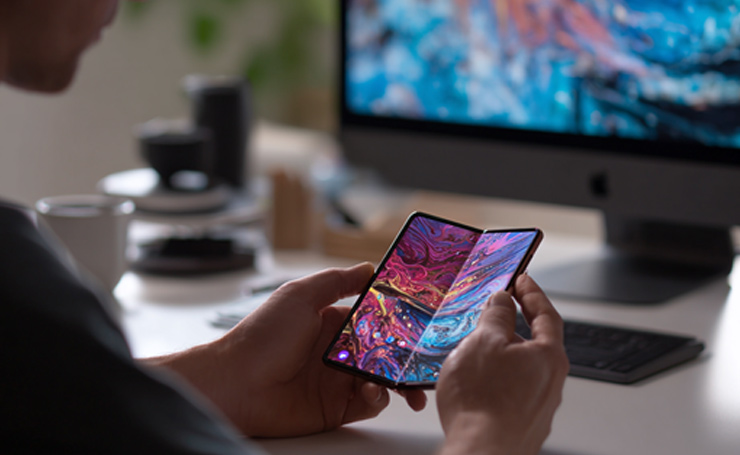
- While we have already seen the smartphone from Samsung, we can now expect Apple to launch one really soon, with brands like Huawei and Xiaomi also following up on the trend.
- While folds are in consideration, Samsung might be rolling out a tri-fold smartphone, along with Rollable smartphone speculations from Oppo as well.
Based on the industry updates, a list of expected smartphones has been updated at the end of the blog, along with their expected launch year and features.
Smartphones Battery Technology Trends
Significant advancements in smartphone battery technology are forecasted for the year 2026 and beyond.
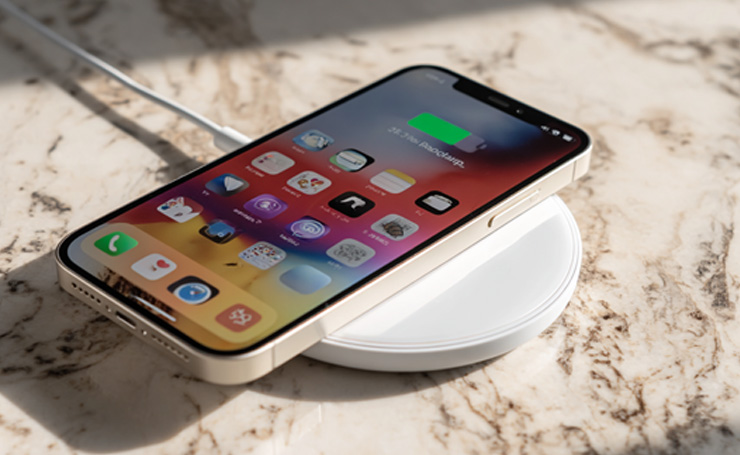
- By 2026, High-silicon anode batteries will be incorporated, replacing the traditional graphite batteries.
- The batteries will have longer-lasting materials and faster charging speeds.
- While the Chinese mobile market is already leading with 10% silicon content in their batteries, by 2026, we can expect this to increase by 20-30% which will enable 7,000 to 9,000 mAh capacity in slim devices.
- OTA wireless charging will become a common mode of charging in the upcoming years, allowing devices to charge by being in the vicinity of the power source.
- AI integration and IoT together in the battery management systems will optimize charging cycles, monitor performance, and maximize battery lifespan.
Chinese OEMs like Oppo, Honor, Xiaomi, and OnePlus are aggressively adopting new battery technologies, spurring innovation and pressuring Western manufacturers to follow along the trend.
Mobile Processors Developments and Voice Assistant Evolution in Future Smartphones
Smartphone processors in the future will be driven by AI, while the voice assistants will become more intelligent.
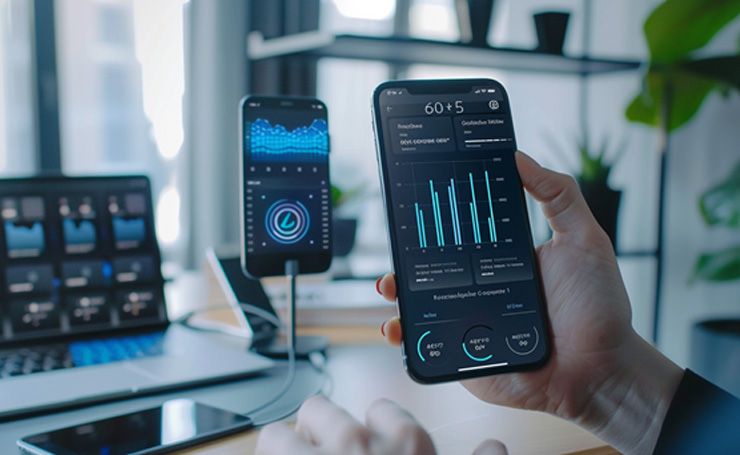
- Future processors will not only have improved efficiency, but they will also provide the next-generation connectivity, enhancing the smartphone’s performance based on the generative AI device requirements and extended reality.
- With the help of faster connectivity and processors, the future AI-powered voice assistants will be more intelligent, conservative, and also predictive.
- With the ability of on-device processing, instant language translations over calls and texts will be possible.
- Manufacturers like TSMC are moving to smaller 3nm and below fabrication processes, allowing for more powerful and efficient chips.
- AI-powered processors will optimize your battery performance based on your smartphone usage habits, helping to enhance your battery consumption and extend battery life.
- The AI- Advanced processors architectures will enable the processors to perform tasks quickly, allowing them to return to a low-power state.
- The upcoming processors will be able to manage the unique software requirements of foldable and rollable phones.
- High-fidelity AR and VR experiences will run smoothly without lag.
- Enhanced biosensors will enable real-time health tracking and predictive health recommendations.
Designs of Future Smartphones (2025-2026)
| Brand | Rumoured Device | Expected Launch Year | Key Expected Features |
| Apple | Foldable iPhone | 2026 to 2027 | Dual displays, slim hinge, advanced AI, and AR support |
| Samsung | Galaxy Tri-Fold | 2025 to 2027 | Large unfolded screen, 200MP camera with powerful AI tools |
| Huawei | Mate XT (tri-fold) | 2026 to 2028 | Multi-fold screen, HarmonyOS, built-in AI ecosystem |
| Xiaomi | Xiaomi 17 Series+ | 2025 to 2026 | External magic back screen, along with fast charging, bold designs |
| Oppo | Find N Rollable/Foldable | 2026 to 2028 | Rollable display, ultra-fast charging, and AI camera features |
| Pixel AI Flagship | 2026 to 2027 | On-device generative AI, Tensor chip advances, AR navigation |
Conclusion: The Future of Smartphones
Smartphones have evolved a lot, and we are already onto the futuristic devices like foldable mobiles and rollable mobiles, along with the smart bands controlled by just finger and hand gestures, and smart glasses, along with satellite connectivity through 6G, smart processing, and more intelligent AI assistance.
Although mobile obsolescence is predicted to come soon after the 6G integration, for the next five years, we can only expect the launch of foldable and rollable devices with two or three folds, along with the smart devices that can integrate with these smartphones to provide immersive experiences to users with both AR and VR, along with smart assistance that will be hands-free.
We are super excited about the upcoming phones and smart devices, so we can try their features and share our updates with you. Stay connected with AI Technology Tips, while we come back with more updates on smartphones, networks, and AI updates.
Frequently Asked Questions
1. Will smartphones be obsolete in the next five years?
No. Smartphones are not expected to become obsolete within the next five years. They will evolve and incorporate smarter processors, 6G connectivity, AR and VR technology, smart devices controlled by hand gestures, and advanced AI assistance. Foldable designs, AI integration. Obsolescence is more likely to be expected after 6G adoption, by the year 2030, and is more likely after its global integration.
2. How will AI change smartphones by 2030?
By 2030, AI is expected to provide autonomous task management, AR-powered navigation, instant translations, personalized automation, battery management, and integration with smart glasses and holographic devices.
3. What impact will 6G have on smartphones?
6G will deliver ultra-fast connectivity, ultra-low latency, and massive capacity. 6G will be an enabler of immersive AR/VR, seamless AI integration, holographic calls, and broader satellite connectivity, but it will also increase the risk of new cybersecurity threats, requiring new security features based on biometrics and next-gen technology for security.
4. Are foldable phones the future of smartphones?
Yes, foldable and rollable phones are the current future of smartphones, with major brands including Apple introducing their foldable devices. These are expected to launch by 2025 to 2030, but they will remain a niche, making only 3% of global shipments by 2029.
5. What are the latest trends in smartphone sustainability?
Smartphone makers are focusing on reducing e-waste. They are working on using recyclable packaging and adopting renewable energy in manufacturing.

