

20-Second Summary
Technology encompasses any innovation that man has made to make lives easier and effective. From machines to the modern world of robotics, space-travelling ships, and artificial intelligence, technology has shifted from being just the tangible products to intangible systems like digital platforms and softwares to help human beings perform better and faster in their daily lives.
This blog is going to cover everything from answering what is technology, the purpose of technology, to its history, and all the major types with real-world examples in the easiest way so you can understand it and see how technology has transformed human lives and how it will impact our future generations.
What is Technology?
If you ask what is technology? The simple answer would be that the meaning of technology is the use of our scientific knowledge, techniques and advanced tools to solve human problems and make their lives easier.
In a simple context, any innovation that happened in the prehistoric era, like the use of stone and lever to move heavy objects and building wheels, to the current era of the 21st century, where artificial intelligence and robotics are helping people do their tasks easily and efficiently, everything innovated is a technology to assist human beings.
Purpose of Technology
The purpose of technology is to make any processes of our daily lives easier, faster, and effective. Today, every field in this world is relying on technology solely, and the meaning of technology has widely expanded from just the tangible technological innovations (machines and devices) to the intangible innovations like digital technology and softwares helping people to excel with the assistance of technology.

History of Technology
The history of technology is as old as the Prehistoric era (2.5 million BCE – 3000 BCE), where simple tools made of stone and wheels were the earliest technology discoveries. Today, we are in the twenty-first century, and technology encompasses Artificial Intelligence and travel to space.
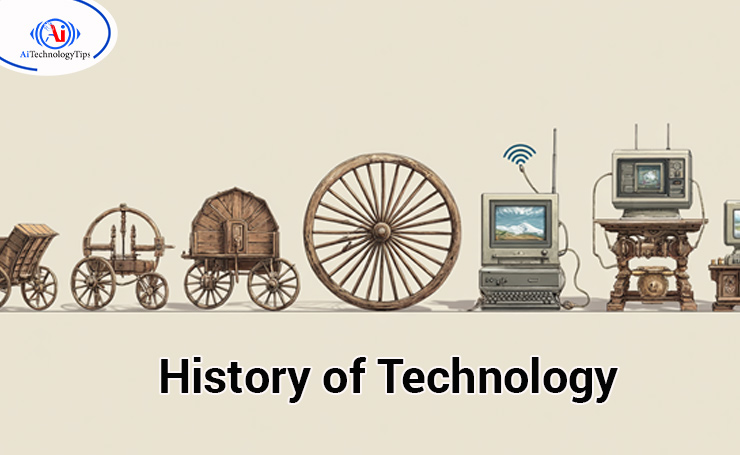
| Era | Approx. Years | Key Developments | Examples of Technology |
| Prehistoric Era | 2.5 million BCE – 3000 BCE | Basic survival tools and early inventions | Stone tools, control of fire, and the wheel |
| Ancient Civilizations | 3000 BCE -500 CE | Agriculture, writing systems, and early engineering | Irrigation, papyrus, aqueducts, pyramids |
| Middle Ages | 500 – 1500 | Mechanical progress, knowledge preservation | Printing press (1450), windmills, eyeglasses |
| Renaissance and Early Modern | 1500 – 1750 | Scientific Revolution, navigation, astronomy | Telescopes, clocks, microscopes, and firearms |
| Industrial Revolution | 1750 – 1900 | Mass production, mechanisation, and steam power | Steam engines, textile machinery, and railways |
| 20th Century | 1900 – 1990 | Electricity, global communication, and the nuclear age | Telephones, automobiles, aeroplanes, computers, nuclear power |
| Digital Age | 1990 – 2010 | Rise of information technology and connectivity | Personal computers, the internet, and mobile phones |
| 21st Century till Present | 2010 – Now | Advanced, interconnected, sustainable tech | Artificial Intelligence, IoT, renewable energy, space exploration |
Major Categories of Technology
When talking about technology and its application in the real world, it is a part of every field of life, from science, healthcare, agriculture, to household needs.
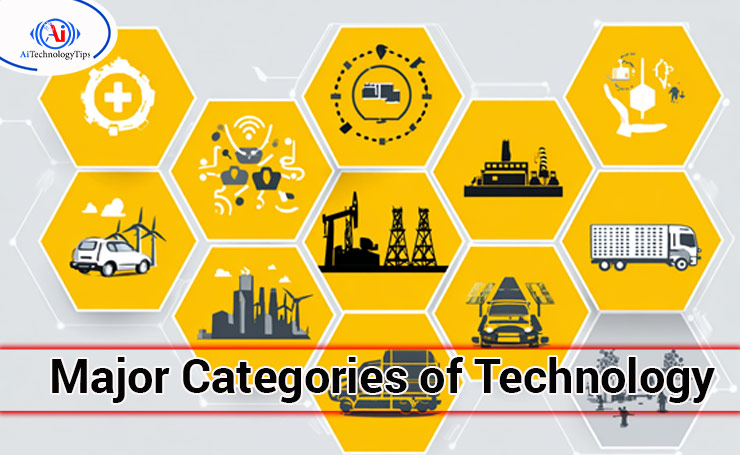
The term and its application are so broad that, in order to make it organized and cover almost every technology type, we have divided technology into six major categories, with each category having five major types, along with the real-world examples of technology in different fields.
The six categories of technology that we will be exploring are:
- Information and Communication Technology (ICT)
- The Medical and Healthcare Technology
- Industrial and Manufacturing Technology
- Energy and Environmental Technology
- Transportation Technology
- Consumer and Everyday Technology
Different Types of Technologies and their Historic Evolution
Now that we know the six categories, let us explore each in detail along with their five major technology types and the practice of technology in everyday life for each technology type..
Information and Communication Technology (ICT)
Information technology is the category of technology that refers to all the digital devices, tools and systems that help human beings to store, process and share information using the internet, softwares, and computers.
From computers, mobiles, and laptops to social media platforms, everything that shapes the way we access knowledge and communicate using the internet is ICT.
Computers and Software
- Computers and software are being used widely in all fields, from business operations to education, designing, and manufacturing.
- We are now expecting Quantum computing and advanced AI software as the future innovations in this technology type.
- Examples of computers and softwares include: Microsoft Office, AutoCAD, MacBooks.
Internet and Networking
- The Internet and networking technology are playing a crucial part in global communication, e-commerce, and remote working. People can now even run businesses from the comfort of their homes, and pay bills or receive payments within seconds from across the globe.
- Future innovations in this technology are the expectation of 6G networks with ultra-fast connectivity.
- Examples include the Google, Amazon Web Services, and Wi-Fi.
Mobile Technology
- Mobile technology and the arrival of smartphones have drastically taken over the world, revolutionizing the connectivity and ease of using the internet for mobile banking and socializing.
- Foldable devices, holographic impact, and AR integrations are expected in future innovations of this technology.
- Examples are iPhone, Samsung, WhatsApp, Instagram, and Wise Payments.
Artificial Intelligence and Machine Learning
- Artificial Intelligence has made great impact, and now it is not just about having chatbots, but it is also providing businesses with automation and predictive analytics to transform their productivity.
- From education to business, and almost all fields are now bound to incorporate AI and automation into their systems to stay ahead.
- Self-learning AI and advanced robotics are expected to be seen in future innovations, with efforts to make AI more like humans in thinking and carrying out processes.
- The examples include ChatGPT, Alexa, and Tesla Autopilot.
Cloud Computing
- Cloud computing technology, especially the SaaS platforms, data storage and streaming, has been helping all industries across the globe achieve management of their operations online in one place.
- Future expected innovations in this technology would be Edge computing and decentralized systems.
- Examples from the real world are Google Drive, Netflix, Dropbox, Zoho, and HubSpot.
Medical and Healthcare Technology
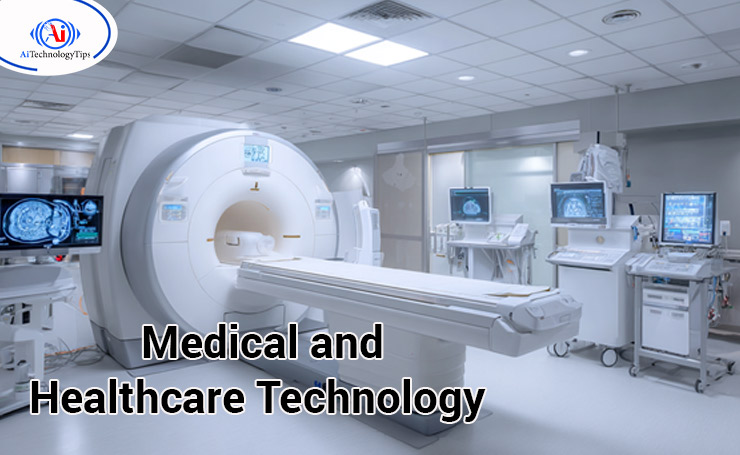
The Medical and Healthcare technology category includes innovations that not only help to improve human life but also extend it. Healthcare technologies like diagnostic tools such as MRI machines, CT scans, biotechnology, and prosthetics are all medical technologies that make our health better, provide patients with effective treatments and help to prevent and control diseases.
| Type of Technology | Applications Today | Future Innovations | Examples |
| Medical Imaging | Diagnostics with MRI, CT scans, X-rays | AI-driven imaging, portable scanners | GE MRI machines, Siemens CT scanners |
| Biotechnology | Gene editing, vaccine development | Personalized medicine, synthetic biology | CRISPR, Moderna vaccines |
| Telemedicine and Health Apps | Remote consultations, patient monitoring | VR consultations, digital hospitals | Teladoc, MyFitnessPal, Apple Health |
| Medical Devices | Prosthetics, pacemakers, insulin pumps | Smart implants, brain-computer interfaces | Cochlear implants, Medtronic pacemaker |
| Pharmaceutical Technology | Drug discovery, nanomedicine | AI-based drug design, nano-delivery | Pfizer vaccines, Nano-drug carriers |
Industrial and Manufacturing Technology
Industrial technology helps human beings with the massive production of goods at a faster rate with higher precision, also making them safer following industrial standards, to meet the needs of mankind, hence enhancing the efficiency in the manufacturing sector.
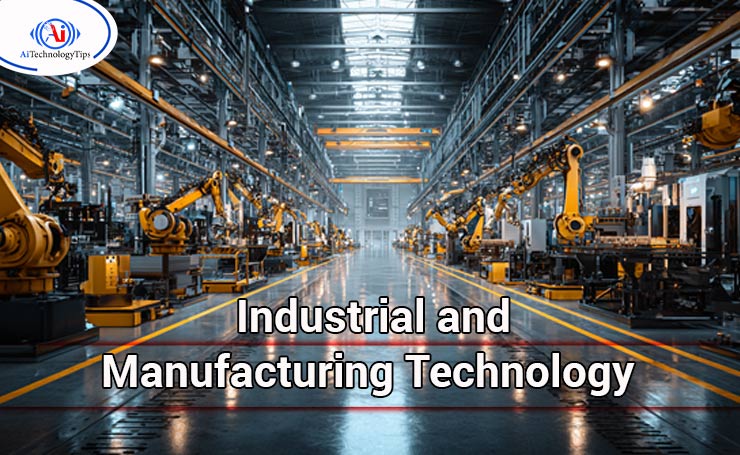
Robotics, automation systems, 3D printing, and advanced machinery are all types of Industrial and manufacturing technologies.
Automation and Robotics
- When we look at its application, Automation and Robotics are a part of assembly lines, logistics, and provide precision in the work.
- We are expecting to see future innovations like Cobots and fully autonomous factories based on the technological advances in this type.
- Examples include ABB Robotics and KUKA robots.
3D Printing (Additive Manufacturing)
- 3D printing has been of great assistance with prototyping, creating custom parts, and building medical models.
- Bioprinting and Large-scale 3D construction are expected to be future innovations in 3D printing based on future technological advances.
- For example, we can consider Stratasys 3D printers and Formlabs.
Nanotechnology
- Nanotechnology is another technology type being used in the industry and manufacturing sector. This technology is the science of manipulating matter at the nanoscale size range to control matter at the atomic and molecular level to design new materials, devices and systems in various fields, even outside the industrial and manufacturing sector.
- Its application is seen in various fields like medicine, energy, and manufacturing, with advanced coatings and the creation of materials and devices.
- We can expect future innovations like Nano-medicine and atomic-level manufacturing in its technological advancements.
- Examples are Nanoco quantum dots and NanoSilver.
Smart Manufacturing (Industry 4.0)
- The examples of application of this technology are IoT-enabled monitoring and predictive maintenance.
- Expected future innovations include AI-driven and self-optimising factories.
- Examples are Siemens MindSphere and Bosch IoT.
Construction Technology
- The application of construction technology can be seen in prefabrication, smart materials and heavy-duty construction machinery.
- Self-healing concrete and robotic construction are the expected futuristic innovations in this technology field.
- Examples are Caterpillar machines and prefabricated housing.
Energy and Environmental Technology
This category of technology includes innovations that generate, store, and manage energy while reducing environmental impact.
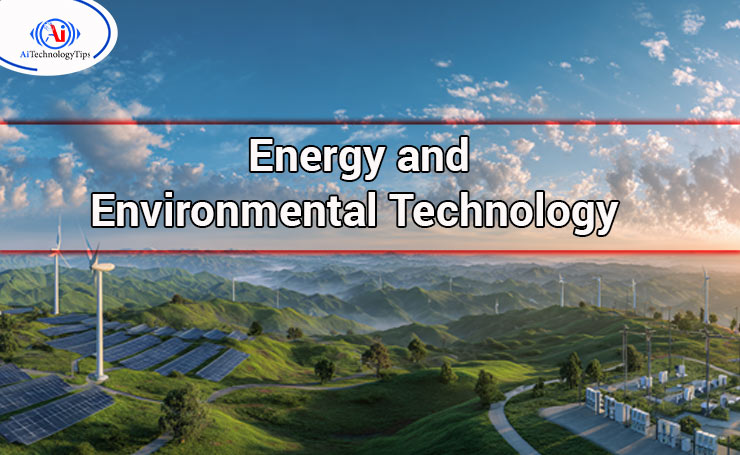
Renewable energy sources, electric vehicles, and sustainable building systems are examples of the energy and environmental technology category, as they promote an environmentally-friendly approach, ensuring a safe and efficient future.
| Type of Technology | Applications Today | Future Innovations | Examples |
| Renewable Energy | Solar, wind, hydropower | Fusion power, hyper-efficient solar panels | Tesla Solar, Vestas Wind Turbines |
| Energy Storage | Lithium-ion batteries, grid storage | Solid-state batteries, hydrogen fuel cells | Tesla Powerwall, CATL batteries |
| Nuclear Technology | Power generation, medical isotopes | Safer modular reactors, nuclear fusion | ITER, NuScale SMRs |
| Green Building Technology | Smart HVAC, energy-efficient lighting | Net-zero buildings, carbon-capturing tech | LEED-certified buildings and the Smart HVAC |
| Waste Management and Recycling | E-waste recycling, smart sorting | Circular economy, AI-driven recycling | TerraCycle, AMP Robotics |
Transportation Technology
Travelling from one place to another became efficient with wheels in the prehistoric era, but now it has gone beyond space.
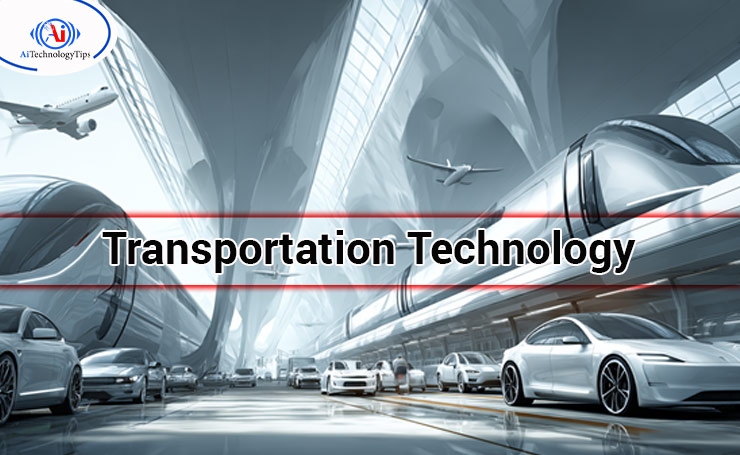
- Transportation technology includes all the innovations in transportation vehicles that move people and goods efficiently.
- It ranges from automobiles, aviation, and railways to advanced innovations such as autonomous vehicles and space exploration technology.
Automotive Technology
- We see the automotive technology application in electric and hybrid vehicles.
- Fully autonomous EVs and solar-powered cars will become the future.
- Current examples of automotive technology include the Tesla EVs, the Toyota Prius, and Rivian.
Aerospace Technology
- We are now in the era of aviation and satellites, where the application of this technology is already visible and is set to see the future technological advancements, like space tourism and reusable rockets.
- Examples are the SpaceX Falcon 9 and Boeing 787.
Rail and Maritime Technology
- We are already travelling in high-speed trains, not only providing faster transportation, but also using maritime transportation as a means of shipping across the world.
- We can expect to see autonomous shipping fleets in future.
- The examples include Japan’s Shinkansen and Maersk smart ships.
Autonomous Vehicles
- These are the vehicles that use a combination of sensors, cameras, radar, and artificial intelligence (AI) to operate and navigate without direct human control or intervention.
- Autonomous vehicles can be seen becoming a major part of transport in the future.
- The examples include the Tesla FSD and the Waymo.
Logistics and Navigation Systems
- Logistics and navigation technologies like GPS and GNSS enable the real-time tracking of vehicles and shipments, route optimization, and efficient management of the supply chain.
- We can expect to see future technology advancements like AI-powered logistics and drone delivery.
- The real-world examples include Google Maps and FedEx SenseAware.
Consumer and Everyday Technology
Consumer technology includes all the tools people use daily in their lives to attain comfort, convenience, and entertainment.
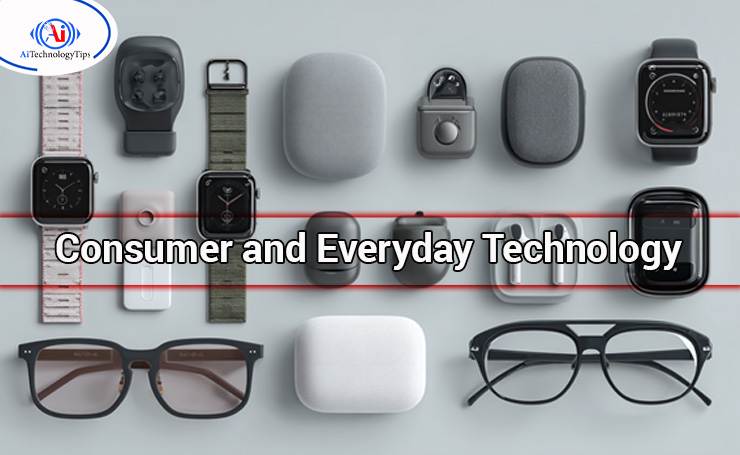
From smart home devices, wearable technology, household gadgets, and digital entertainment systems, this category includes all forms of technologies that integrate into our daily lives, making them easier and efficient.
| Type of Technology | Applications Today | Future Innovations | Examples |
| Smart Home Devices | Voice assistants, smart thermostats | Fully automated, the AI-driven homes | Amazon Alexa, Google Nest |
| Wearable Technology | Fitness trackers, smartwatches | AR glasses, health-monitoring wearables | Apple Watch, Fitbit, Oculus |
| Entertainment Technology | Streaming, gaming consoles | Immersive VR/AR, holographic media | Netflix, PlayStation 5 and the Meta Quest |
| Household Appliances | Robotic cleaners, smart refrigerators | Self-repairing appliances, connected kitchens | Roomba, Samsung Family Hub fridge |
| Financial Technology (FinTech) | Digital wallets, mobile banking, blockchain | AI-driven finance, central bank digital currencies | PayPal, Coinbase and Square Cash App |
Impact of Technology on Everyday Life
The impact of technological advancements has had a huge positive impact on everyday life across the globe, whether in professional or personal life. But this does not mean that technology has not made any negative impacts.
Positive Impact of Technology
- Today, with the help of technology, humans are able to treat life-threatening diseases, communicate globally within a matter of seconds using the internet, have most of their routine and work tasks automated with the ease of remote working, and have easy access to entertainment, shopping and healthcare facilities.
- There is no industry or human that can now think of functioning without technology. We can only expect to keep improvising it and making it more advanced, seeking to do most of our personal and professional tasks, freeing us up from manual efforts.
Negative Impact of Technology
- Technology possesses many risks, such as impacting the mental health of individuals who are using social media and may develop complexes seeing others boasting about what they lack.
- There is a huge increase in speech delays in children using screentime in early years.
- People relying on technology have less physical activity, hence causing more health issues like obesity and laziness.
- With technology, we are also at risk of losing our information and data, raising privacy concerns.
- Not just that, technology also poses a great threat to social division by spreading hate speech and misinformation when used wrongly.
We can avoid these negative impacts by using the technology responsibly and understanding the difference between having technology for ease, but not depending on it solely, and losing our own active lifestyle.
How will Technology Shape Our Future?
We are now expecting great advancement in artificial technology, which is going to be deeply integrated into human life in future.
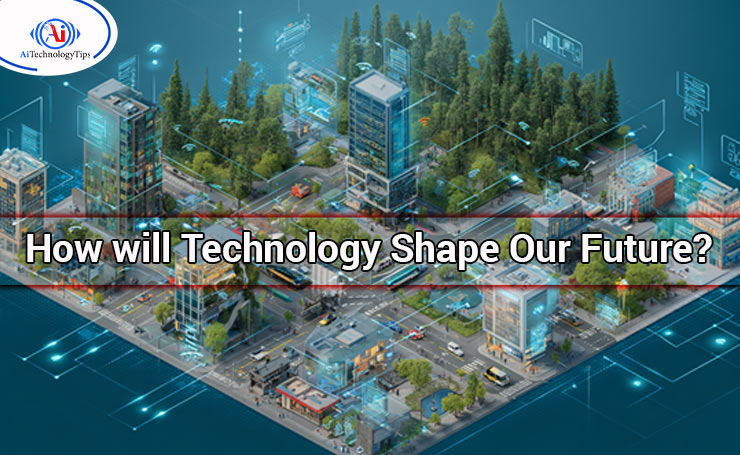
- From handling the jobs, analyzing the business reports and helping with decision making, AI will become a personal assistant to help human beings be more capable of innovating technologies to ease the life of humans, enabling them to focus on themselves and a better lifestyle.
- We can hope to see the medical advancements allowing humans to slow ageing and cure severe diseases that are untreatable today, extending the lives of human beings, by using technology.
- We can control the population and also expand life to other planets.
Final Remarks
Technology has made the lives of human beings advanced and easier. Today we can see technology almost everywhere, from the sockets in the walls of our homes and offices, to the mobiles in our hands and the medical treatments and healing of complex life-threatening diseases.
- We are not expected to stop the technology advancement here; human beings are yet to experience the full integration of AI in every field of technology.
- Although we can expect a lot of advancements, as discussed above in future technological expectations, we must be cautious while depending solely on AI and technology, and not forget the roots of being human beings and the need to keep ourselves physically active and mentally able to be in control of technology and not let technology control us.
We are sure that you have enjoyed looking at all the categories and types of technologies and what to expect from them in the coming years. For more such informative technology-related information, stay connected with the AI Technology Tips website.
Frequently Asked Questions
- What is technology in simple words?
Technology, in simple words, is the use of scientific knowledge, tools and techniques to build devices and softwares that make human life easier and solve their problems.
- What are the main types of technology?
The major categories and types of technology are: Information & Communication, Medical & Healthcare, Industrial & Manufacturing, Energy & Environmental, Transportation, and Consumer & Everyday technology.
- What is the purpose of technology?
The purpose of technology is to make human life easier by solving their problems and minimising the manual tasks on their behalf, and improving their lifestyle, with better health and abilities to perform tasks using technology.
- What are some examples of technology in daily life?
Some examples of technology in real life include smartphones, computers, BP checking machines, electric scooters, and online banking or shopping.
- How has technology changed human life?
Technology has transformed human life with better medical treatments and disease cures, remote working ability, ease of global communication and information provision, online entertainment and advanced and faster transportation.

